
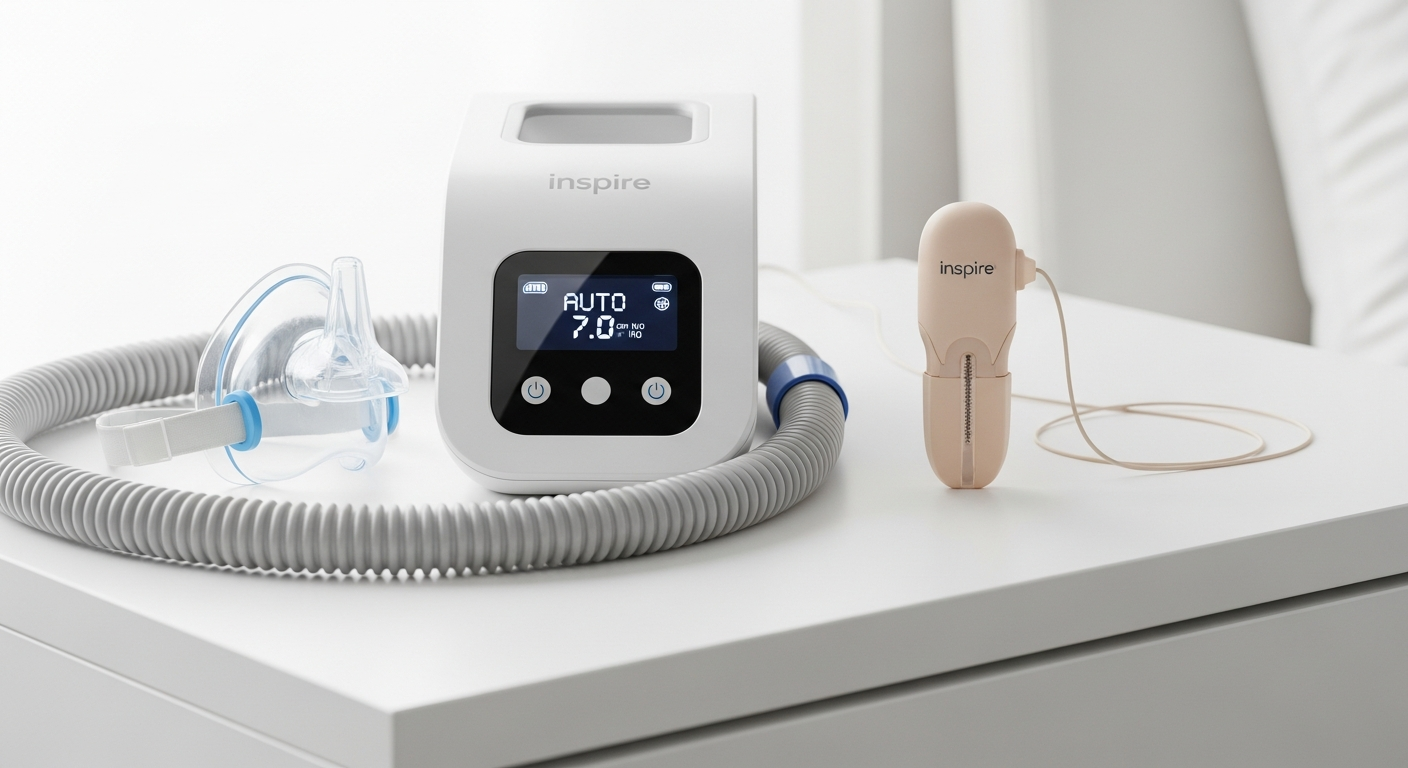
Why Do So Many People Struggle with CPAP?
CPAP (Continuous Positive Airway Pressure) is the gold standard treatment for obstructive sleep apnea (OSA). But here's the reality: up to 50% of patients struggle to use CPAP consistently. If you're one of them, you're not alone.
Common CPAP Problems
Comfort Issues
- Mask doesn't fit properly
- Dry mouth or nose
- Claustrophobia
- Skin irritation
- Noise from the machine
Lifestyle Challenges
- Difficult to travel with
- Partner disturbance
- Feeling "dependent" on a machine
- Embarrassment
Medical Complications
- Aerophagia (swallowing air)
- Sinus infections
- Nosebleeds
What Defines CPAP Intolerance?
In Singapore, you're generally considered CPAP-intolerant if you:
- Can't use CPAP for at least 4 hours per night
- Have tried for 3-6 months with adjustments
- Have documented side effects or complications
This is important because some insurance companies require documented CPAP failure before covering alternative treatments.
Alternative #1: Inspire Upper Airway Stimulation
What Is Inspire?
Inspire is an implantable device (like a pacemaker) that stimulates your hypoglossal nerve to keep your airway open during sleep. It's the most exciting development in sleep apnea treatment in decades.
How It Works
- Sensing lead detects when you breathe in
- Stimulation lead activates tongue muscles
- Tongue moves forward, opening airway
- You control it with a remote
Am I a Candidate?
You may be suitable for Inspire if you:
- Have moderate to severe OSA (AHI 15-65)
- Cannot tolerate CPAP
- Are not significantly obese (BMI < 35)
- Do not have concentric collapse on DISE (drug-induced sleep endoscopy)
Cost in Singapore
Inspire costs approximately $50,000-$70,000 in Singapore, including the device, surgery, and programming. Some insurance plans cover it for CPAP-intolerant patients.
Results
- 79% reduction in AHI on average
- 90% of bed partners report no snoring
- 94% satisfied with Inspire at 5 years
Alternative #2: Upper Airway Surgery
UPPP (Uvulopalatopharyngoplasty)
The most common sleep apnea surgery. Removes excess tissue from the soft palate and throat.
Success rate: 40-60% reduction in AHI Cost: $13,700-$21,600 (private, based on MOH benchmarks) Recovery: 2-3 weeks
MMA (Maxillomandibular Advancement)
Moves both jaws forward to enlarge the airway. More invasive but highly effective.
Success rate: 85-90% reduction in AHI Cost: $40,000-$70,000 (private) Recovery: 4-6 weeks
Multi-Level Surgery
Combines procedures targeting multiple sites of obstruction (nose, palate, tongue base).
May include:
- Septoplasty/turbinate reduction
- UPPP or palate procedures
- Tongue base reduction
- Hyoid suspension
Alternative #3: Oral Appliances
Mandibular Advancement Devices (MAD)
Custom-fitted dental devices that hold your lower jaw forward during sleep, keeping the airway open.
Pros
- Non-invasive
- Portable (great for travel)
- No surgery required
- Lower cost ($2,000-$4,000)
Cons
- Less effective than CPAP for severe OSA
- May cause jaw pain or bite changes
- Requires regular dental follow-up
Best For
- Mild to moderate OSA
- Snoring without significant OSA
- CPAP-intolerant patients not suitable for surgery
Alternative #4: Weight Loss
If you're overweight, losing 10-15% of body weight can significantly improve sleep apnea. Some patients achieve complete resolution.
Weight Loss Options in Singapore
- Lifestyle modification (diet, exercise)
- Medically supervised programs
- Bariatric surgery for severe obesity
The Catch
Weight loss takes time and OSA continues to damage your health while you're losing weight. Most doctors recommend using CPAP or another treatment while working on weight loss.
Alternative #5: Positional Therapy
Some people only have sleep apnea when sleeping on their back. Positional therapy (sleeping on your side) can help.
Tools
- Tennis ball sewn into pajama back
- Positional therapy devices
- Specialized pillows
- Vibrating position trainers
Limitations
Only works for positional OSA (about 25-30% of patients)
How to Choose the Right Alternative
Step 1: Get Proper Diagnosis
Before considering alternatives, ensure you have:
- Recent sleep study (within 2 years)
- DISE (drug-induced sleep endoscopy) for surgical planning
- Documented CPAP trial
Step 2: Consult an ENT Sleep Specialist
Not all ENT doctors specialize in sleep surgery. Look for:
- Fellowship training in sleep medicine
- Experience with Inspire implantation
- Multi-disciplinary approach
Step 3: Consider Your Anatomy
DISE reveals where your airway collapses:
- Palate collapse → UPPP may help
- Tongue base → Inspire or tongue procedures
- Circumferential → May need MMA
Step 4: Factor in Lifestyle
- Frequent travelers → Oral appliance or surgery
- BMI > 35 → Weight loss + CPAP, possibly bariatric surgery
- Young and healthy → More surgical options
Insurance Coverage in Singapore
MediSave
- Sleep surgery is generally claimable
- Limits vary by procedure ($2,450-$4,500)
Private Insurance
- Coverage varies significantly
- May require documented CPAP failure
- Pre-authorization usually needed
- Some plans exclude "elective" sleep surgery
Conclusion
CPAP isn't the only option for treating sleep apnea. If you're struggling, there are alternatives — but choosing the right one requires proper evaluation by a sleep specialist.
The best treatment is the one you'll actually use consistently. Whether that's CPAP, Inspire, surgery, or an oral appliance, getting your sleep apnea treated is what matters.
Ready to explore your options? Connect with a sleep specialist who can evaluate your specific situation.