
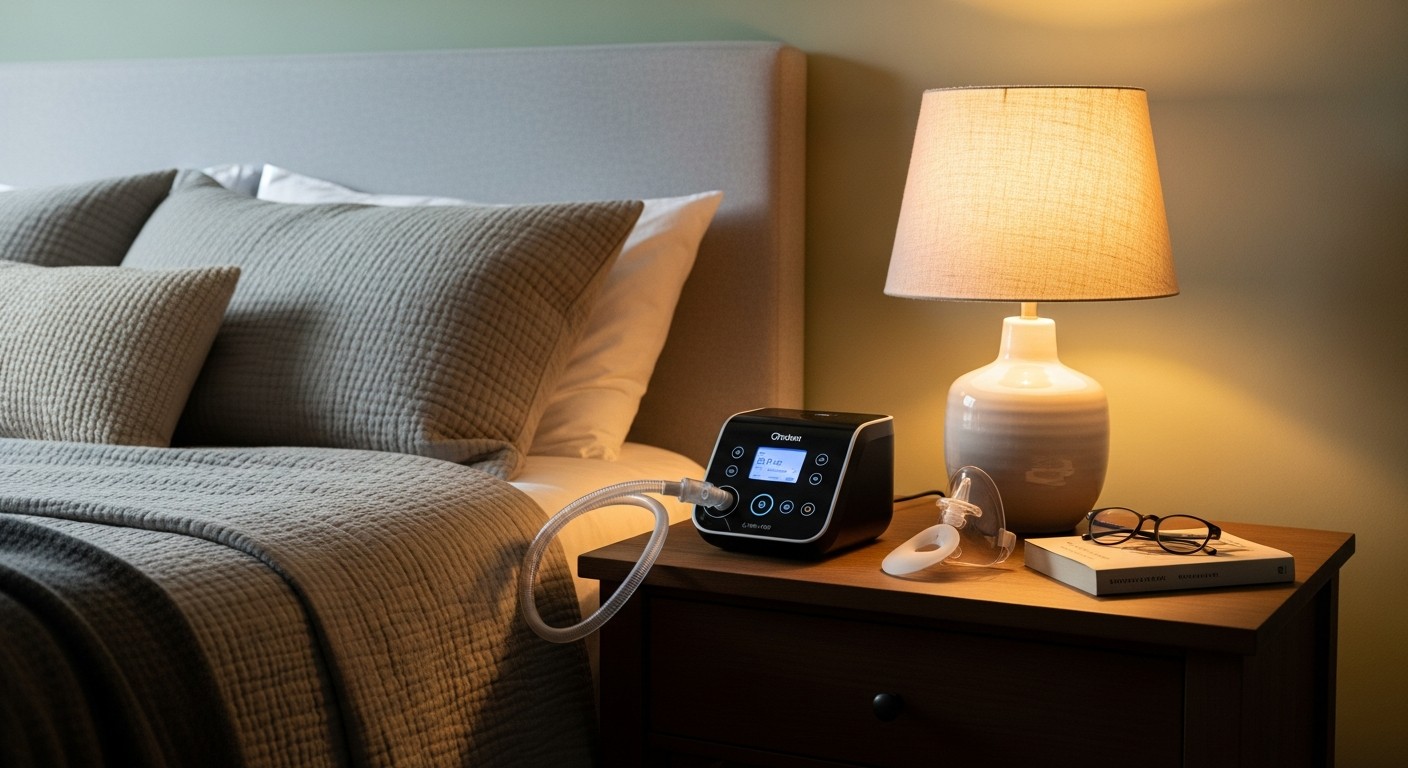
CPAP Therapy
Continuous Positive Airway Pressure (CPAP) is the gold standard treatment for obstructive sleep apnea.
How It Works
A CPAP machine delivers a steady stream of pressurized air through a mask while you sleep, keeping your airway open and preventing apnea episodes.
Benefits
- ✓Highly effective when used consistently (90%+ success rate)
- ✓Non-invasive and reversible
- ✓Immediate improvement in symptoms
- ✓Reduces cardiovascular risks
Common Challenges
- •Mask discomfort or claustrophobia
- •Dry mouth or nasal congestion
- •Machine noise (though modern devices are much quieter)
- •Travel inconvenience
- Auto-adjusting pressure (APAP): Adjusts air pressure throughout the night based on your needs
- Heated humidification: Reduces dryness and congestion
- Ramp feature: Starts at lower pressure, gradually increases as you fall asleep
- Quiet operation: Modern machines operate at 25-30 decibels (whisper-quiet)
- Data tracking: Monitor your therapy compliance and effectiveness
MediSave: Not directly claimable, but approved under Chronic Disease Management Programme (CDMP) at some clinics
Oral Appliances (Mandibular Advancement Devices)
Custom-fitted mouthpieces that reposition your jaw and tongue to keep your airway open during sleep.
Best For
- • Mild to moderate sleep apnea (AHI <30)
- • CPAP-intolerant patients
- • Positional sleepers
- • Patients with good dental health
Effectiveness
- • 50-70% reduction in AHI for mild-moderate OSA
- • Less effective than CPAP for severe cases
- • High compliance rate (easier to tolerate than CPAP)
Cost
$1,500 - $3,500Custom-fitted devices from sleep dentists. Requires periodic adjustments and replacement every 3-5 years.
Surgical Treatment Options
For patients who can't tolerate CPAP or have anatomical issues, surgery can provide long-term relief.
Removes excess tissue from soft palate and uvula to widen airway.
Success: 50-70%
Recovery: 2-3 weeks
Cost: $7,000-$10,000
Implantable device stimulates tongue muscle during sleep.
Success: 75%+
Recovery: 1-2 weeks
Cost: $25,000-$35,000
Jaw surgery to permanently enlarge airway—most effective option.
Success: 90%+
Recovery: 6-12 weeks
Cost: $30,000-$50,000
Lifestyle Changes & Supportive Measures
While not standalone treatments for moderate-severe OSA, these changes can significantly improve outcomes.
Losing just 10% of body weight can reduce AHI by up to 30%. For overweight patients, significant weight loss can completely resolve mild-moderate OSA.
- • Reduces fat deposits around airway
- • Decreases inflammation
- • May eliminate need for CPAP in some cases
Many patients have worse apnea when sleeping on their back. Training yourself to sleep on your side can help.
- • Use positional pillows or sleep vests
- • "Tennis ball technique" (sew ball into pajama back)
- • Most effective for mild, positional OSA
Alcohol and sleeping pills relax throat muscles, worsening airway collapse. Avoid alcohol at least 3-4 hours before bedtime.
Smoking increases inflammation and fluid retention in the airway, making OSA worse. Smokers are 3x more likely to have sleep apnea.
Chronic nasal blockage forces mouth breathing, increasing airway collapse risk. Consider allergy treatment or nasal surgery if indicated.
Exercise improves OSA severity independent of weight loss. Aim for 150 minutes of moderate aerobic activity per week.
How to Choose the Right Treatment
The "best" treatment depends on your specific situation. Here's what to consider.
- • Mild (AHI 5-15): Oral appliances, positional therapy, lifestyle changes
- • Moderate (AHI 15-30): CPAP preferred, oral appliances for intolerant patients
- • Severe (AHI >30): CPAP first-line, surgery if anatomy suitable
- • Enlarged tonsils: Tonsillectomy (80%+ success)
- • Deviated septum: Septoplasty improves CPAP tolerance
- • Soft palate collapse: UPPP or Inspire therapy
- • Jaw abnormalities: MMA surgery (90%+ cure rate)
- • Frequent travelers: Oral appliances or surgery (no equipment)
- • Claustrophobic: Nasal masks, surgery, or oral appliances
- • Want permanent solution: Surgery (if candidate)
- • Budget-conscious: CPAP (lower upfront cost)
- • Heart disease: CPAP recommended (proven cardiovascular protection)
- • Dental issues: May limit oral appliance use
- • Surgical risks: Consider non-invasive options first
- • Central sleep apnea: Requires specialized CPAP (BiPAP/ASV)
- • First-time diagnosis: Try CPAP first (gold standard)
- • Failed CPAP: Oral appliances, surgery, or combination
- • Partial tolerance: Optimize settings, try different masks
- • Nasal congestion: Treat underlying issue, try nasal surgery
- • Quick relief: CPAP (works immediately)
- • Equipment-free life: Surgery (one-time intervention)
- • Minimize costs long-term: Surgery (no ongoing supplies)
- • Reversibility: CPAP, oral appliances (non-permanent)