
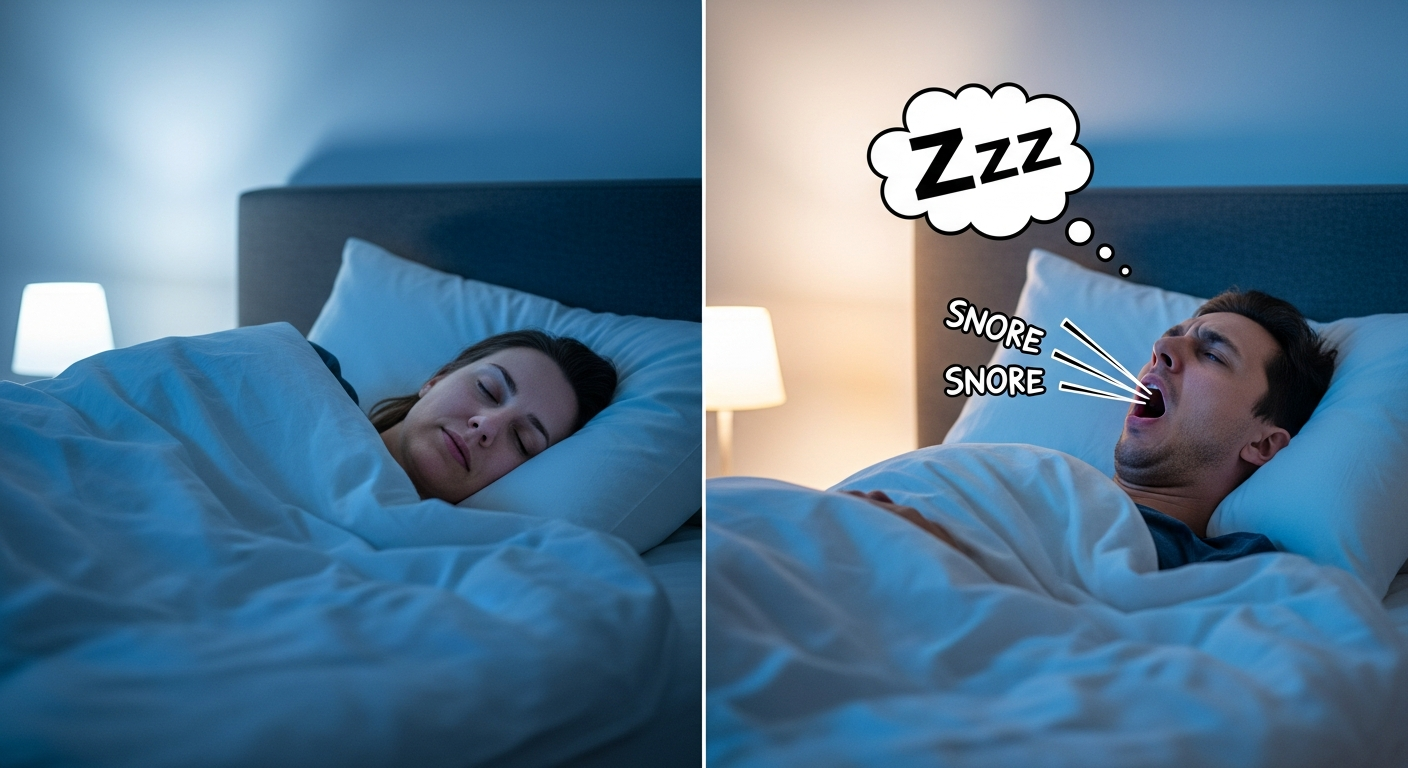
Is Your Snoring Normal or Dangerous?
About 40% of Singaporean adults snore. But while snoring is often dismissed as just annoying, it can sometimes indicate a serious condition: obstructive sleep apnea (OSA).
What Is Simple Snoring?
Simple (or primary) snoring is noisy breathing during sleep without significant health consequences.
Characteristics:
- Relatively steady rhythm
- No breathing pauses
- No significant oxygen drops
- Wake up feeling reasonably rested
- No excessive daytime sleepiness
Causes:
- Nasal congestion
- Alcohol before bed
- Sleeping position (back sleeping)
- Mild soft tissue vibration
- Age-related muscle relaxation
What Is Sleep Apnea?
Sleep apnea involves repeated episodes where breathing stops or becomes very shallow during sleep.
Characteristics:
- Loud snoring with silent pauses
- Gasping or choking sounds
- Witnessed breathing stops
- Excessive daytime sleepiness
- Morning headaches
- High blood pressure
What happens during an episode:
- Airway collapses
- Breathing stops (10-60 seconds)
- Oxygen drops
- Brain wakes you slightly (arousal)
- Airway opens, loud snort/gasp
- Cycle repeats (can be 30+ times per hour)
Key Differences
| Feature | Simple Snoring | Sleep Apnea |
|---|---|---|
| Sound pattern | Steady | Interrupted by pauses |
| Breathing | Continuous | Stops and starts |
| Oxygen levels | Normal | Drops repeatedly |
| Sleep quality | Relatively normal | Fragmented |
| Daytime energy | Normal | Excessive sleepiness |
| Health risks | Minimal | Significant |
Warning Signs Your Snoring May Be Sleep Apnea
Ask Your Partner
- Do you stop breathing during sleep?
- Do you gasp or choke in your sleep?
- Is the snoring getting louder over time?
- Do you seem restless at night?
Ask Yourself
- Do you wake up with headaches?
- Do you feel unrefreshed despite adequate sleep?
- Do you struggle to stay awake during the day?
- Is your blood pressure hard to control?
- Have you gained weight recently?
Risk Factors
- BMI > 30
- Neck circumference > 43cm (men) or 38cm (women)
- Age > 40
- Male (though women catch up post-menopause)
- Family history
- Nasal obstruction
- Alcohol use
The Bed Partner Test
Have your partner observe your sleep for one night and note:
Simple snoring likely if:
- Snoring is consistent without long pauses
- Breathing seems regular
- You don't seem to gasp or choke
- You don't thrash around
Sleep apnea likely if:
- Snoring is interrupted by silence (10+ seconds)
- Breathing restarts with a loud gasp
- You seem to struggle to breathe
- You're very restless
- Partner notices you stop breathing
When to See a Doctor
See a doctor soon if:
- Partner witnesses breathing pauses
- Excessive daytime sleepiness affecting work/driving
- Morning headaches
- High blood pressure
- Mood changes or difficulty concentrating
Consider evaluation if:
- Loud snoring that disturbs partner
- Waking up unrefreshed
- Multiple risk factors
- Weight gain with new/worsening snoring
What Happens at the Doctor
Initial Consultation
- Medical history
- Physical examination (neck, throat, nose)
- Epworth Sleepiness Scale questionnaire
- Discussion of symptoms
Sleep Study
Either home sleep test or in-lab polysomnography to:
- Confirm diagnosis
- Determine severity
- Guide treatment decisions
Results
AHI (Apnea-Hypopnea Index):
- 5: Normal (simple snoring)
- 5-15: Mild OSA
- 15-30: Moderate OSA
- 30: Severe OSA
Treatment Approaches
For Simple Snoring
- Lifestyle changes (weight loss, no alcohol before bed)
- Sleep position training (side sleeping)
- Nasal strips or sprays
- Oral appliances
- Minor procedures (if anatomical cause)
For Sleep Apnea
- CPAP (gold standard)
- Oral appliances (mild-moderate cases)
- Surgery (for CPAP-intolerant patients)
- Weight loss (adjunct therapy)
Why It Matters
Simple snoring is annoying but not dangerous. Sleep apnea, however, increases risk of:
- Heart attack (30% higher)
- Stroke (60% higher)
- Type 2 diabetes
- Car accidents (drowsy driving)
- Depression
- Premature death
Getting diagnosed early and treated effectively can significantly reduce these risks.
Conclusion
Not all snoring is sleep apnea, but persistent, loud snoring with daytime symptoms deserves evaluation. A sleep study is the only way to definitively distinguish between simple snoring and sleep apnea.
If you're unsure whether your snoring is a problem, err on the side of getting checked. The consequences of untreated sleep apnea are too serious to ignore.